
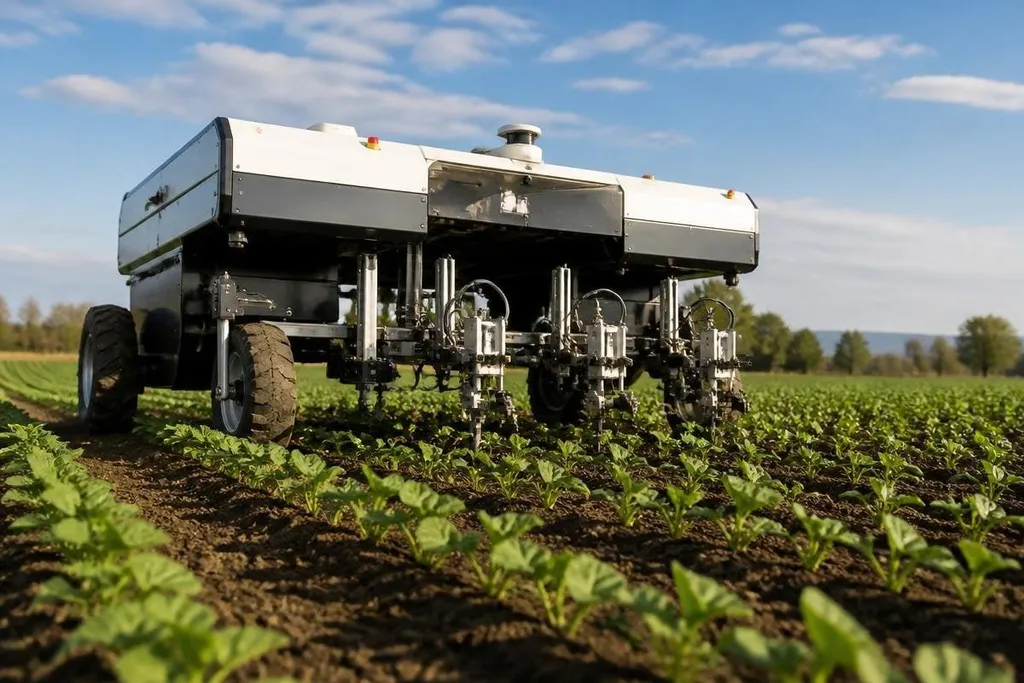
A weeding robot must find a crop, separate it from nearby weeds, and remove the weed without harming the soil or plant. That task sounds narrow, but it sits where farm labor, chemical use, crop health, and machine control meet.
For a grower comparing automation options, the useful question is simple: can a robot handle enough rows, in real field conditions, to earn its place?
Quick read
- Mechanical weeders cut or disturb weeds between crop rows.
- Cameras and machine learning help robots tell crops from unwanted plants.
- Field tests matter more than a neat demonstration on bare soil.
The work a weeding robot does
Most weeding robots move slowly along planted rows. A camera records the ground ahead, software marks likely crop and weed locations, and an end effector acts on the weed.
An end effector is the part that touches the plant or soil.
Some systems cut weeds with a blade. Others pull them, disturb the soil around them, or apply a small amount of treatment to one plant. The method changes what the robot can do in a crop and how much soil it moves.
Row spacing matters too. Systems built for wide vegetable rows may struggle in a dense crop with little open soil. The crop's height, leaf shape, planting pattern, and growth stage all affect what the camera can see.
Why farms are paying attention
Weeds take water, light, and nutrients from crops. They can also make harvest harder when unwanted plants grow through the crop. A robot that removes weeds early may reduce the work left for people later in the season.
Labor is another reason. Hand weeding can take many hours across a field, and the work must often happen within a short window. A robot cannot remove every labor need, but it may handle repeated passes while workers focus on tasks the machine cannot do.
Chemical use is part of the discussion. A robot that treats individual weeds can use less product than a sprayer covering an entire field, but that claim needs field data for each crop, weed mix, and treatment method. A camera does not make the result automatic.
The jump from a test plot to daily farm work depends on details a product page may skip. Robot24.com's agriculture robotics reporting can tie a weeding robot's claim to crop, field size, weed type, speed, and operator work before the next section tests where these machines struggle.
The hard parts in a real field
Sunlight changes through the day. Dust can cover a lens. Wet soil changes how wheels move, and leaves can hide weeds from the camera. These are ordinary field conditions, yet each one can reduce detection accuracy or slow the robot.
The robot also needs a safe response when it is unsure. Stopping may protect a crop, but repeated stops reduce the area it can cover. A machine that works well only in clean rows may need a person nearby for much of the day.
Navigation adds another limit. A robot may use satellite positioning, cameras, or both to stay in a row. Tall plants, trees, slopes, and poor signal can affect its path. The machine must also turn at the end of each row without crushing plants or leaving large areas untreated.
The cost is more than the robot's purchase price. A farm needs charging, storage, software updates, repairs, spare parts, and a worker who can check the machine. Those needs decide whether the system fits the farm better than a tractor attachment or a paid crew.
Before a farm buys one
Use this checklist when comparing a weeding robot with current field work:
- Name the crop: Confirm the crop, row spacing, plant size, and weed types used in the maker's field results.
- Check the work rate: Ask how many hours the robot can run and how often it stops for charging, cleaning, or help.
- Ask about missed weeds: Find out how the system handles plants hidden by leaves, dust, shadows, or uneven soil.
- Price the full setup: Include the robot, tools, software fees, transport, repairs, and staff time.
- Set a human check: Decide who responds when the robot stops, loses its row, or damages a plant.
I’d treat a weeding robot as a field tool, not a replacement for farm judgment. Its value will come from repeated work in one crop, on one farm, under conditions the maker has measured.
The next useful proof is not another clean demonstration. It is a full season of records showing area covered, weeds removed, crop damage, downtime, and total cost per acre.